Building the Driver Away from the Car
Preparation is not a test of toughness. It is a set of habits that help a driver learn, perform safely and recover well.
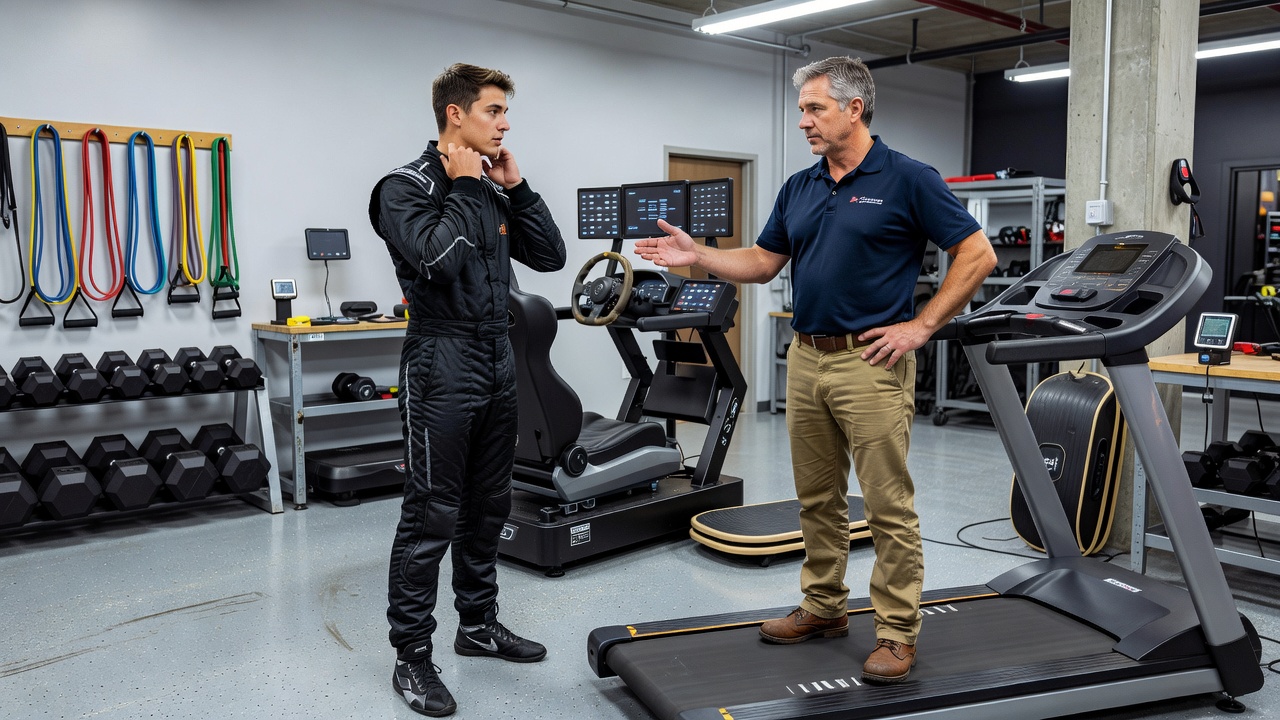
Fitness with a purpose
Driving can demand sustained attention, physical control and the ability to make decisions while tired, warm or under pressure. The exact demands vary by vehicle, circuit, weather and session length. A responsible programme should explain why it includes a particular exercise and how the work is adapted to the individual. General fitness can support a young person, but a high-intensity plan is not automatically appropriate just because racing is demanding.
Ask who designs and supervises physical training, what experience they have with young athletes and how they adapt for growth, health conditions and injury. Coaches should encourage appropriate professional advice where needed, rather than diagnosing medical issues themselves. The goal is a sustainable foundation: movement quality, strength, endurance, mobility and confidence, developed at a suitable pace.
Hydration, sleep, nutrition and recovery belong in the conversation. Families should receive practical, age-appropriate guidance rather than extreme dietary rules or pressure to change body shape. A driver’s welfare matters more than a short-term performance promise. Warning signs such as persistent pain, unusual fatigue or anxiety deserve attention and may require a pause or qualified support.
Technical communication is a trainable skill
Drivers work with mechanics and engineers to describe what the car is doing. “It feels bad” is an honest start, but a useful debrief gradually adds detail: where in the corner a problem appears, whether it changes with speed, what the steering or braking feels like, and whether it happened consistently. The driver does not need to become a vehicle engineer; they need a shared vocabulary and the confidence to report observations accurately.
Data and video can make a discussion more concrete. A coach may help a driver compare braking points, steering traces or a sequence of corners, while explaining what the information can and cannot show. A chart is evidence to discuss, not a verdict about a person. Drivers should be encouraged to ask questions and to tell the truth about what they felt, even when the data suggests a different interpretation.
In a working paddock, mechanics, race engineers, tyre staff, coaches and officials each have distinct responsibilities. A development session can teach a driver how to arrive prepared, listen to a briefing, follow procedures, report a concern and treat team members respectfully. These habits improve the quality of collaboration and help prevent small misunderstandings from becoming bigger problems.
Planning, focus and life outside racing
A diary can help a driver prepare for a test or event: what to bring, what the goal is, which questions to ask and how to capture feedback. Reflection should be short and useful, not an invitation to scrutinise every mistake. Families can ask the young driver what they enjoyed, what surprised them and what they would practise next. That conversation supports ownership and helps distinguish a driver’s own motivation from adult expectation.
School, friendships, rest and family time remain part of a healthy development plan. Racing schedules can be demanding, especially when travel and testing increase. Ask how an academy handles missed sessions, fatigue, pressure and competing commitments. A programme that respects education and recovery is more likely to support steady learning than one that frames constant availability as proof of dedication.
Emotional skills can be practised in ordinary ways: pause before reacting, describe a difficult moment accurately, set a controllable goal and seek help when needed. Confidence should not be confused with never feeling nervous. An instructor can help a driver use nerves as information and build familiarity gradually. For serious mental or health concerns, seek an appropriately qualified professional rather than treating a motorsport coach as a clinician.
Assess the quality of an academy’s preparation
Ask whether physical work is delivered by qualified staff, what individualisation looks like and how the programme communicates welfare concerns. Find out whether a driver is expected to purchase additional coaching or equipment, how sessions fit around school and what happens after an injury. Ask who can access personal data, fitness records or video and how long those records are retained.
Look for a connection between preparation tasks and the demands of driving, while remaining alert to overselling. A programme should be able to explain its method in plain language. It should never imply that a particular fitness score, body type or relentless training volume guarantees selection. Development is individual; progress includes learning to recover, communicate and make sensible choices.
Family checklist
- Is training age-appropriate and supervised by capable staff?
- How are rest, injury and health information handled?
- Does the coach explain how an exercise relates to driving?
- Can the driver speak openly and ask for a change?
- Are school, sleep and time away from racing respected?
- What personal information is collected and who can see it?
Preparedness is the ability to return to the work with curiosity and energy. It is not a demand to live like a professional before a young person is ready.